
Top 7 AI-Powered Lead Gen Tools You’ve Never Considered
AI is reshaping B2B lead generation faster than most teams can keep up. Here are seven powerful, lesser-known AI tools that can help APAC companies scale customer acquisition with smarter automation, better data, and more predictable pipelines.


Discover 7 Underrated AI Lead Generation Tools Helping APAC B2B Teams Automate Outreach, Qualify Leads, and Scale Customer Acquisition
B2B teams across APAC are under pressure to grow pipeline with fewer resources, shorter sales cycles, and increasingly complex buying committees. AI is no longer a “nice-to-have”—it’s becoming the backbone of modern customer acquisition.
Recent data indicate that the global lead generation solutions market is projected to grow from $3.1 billion to over $15 billion by 2031, driven largely by AI-powered automation and data enrichment. Another report highlights how AI is transforming lead generation by making it more efficient, cost‑effective, and data‑driven.
But while everyone talks about the same big platforms, there’s a new wave of AI tools quietly helping teams generate higher‑quality leads with less manual work.
Below are 7 AI-powered lead gen tools you’ve probably never considered—but should.

Top 7 Underrated AI-Powered Lead Gen Tools
1. Pubrio — AI-Driven B2B Prospecting for APAC
Most prospecting tools are built for Western markets, leaving APAC teams to struggle with inaccurate data and low‑fit leads. Pubrio takes a different approach by focusing on region‑specific data, multilingual outreach, and automated lead capture tailored to APAC buying behavior. It’s designed for teams that want predictable pipeline without scaling headcount.
Why it’s underrated
- Built for APAC markets (SG, MY, TW, HK, JP)
- Automated lead capture + enrichment
- AI-personalized outreach sequences
- Subscription model for continuous lead flow
Best for: B2B teams needing predictable, scalable pipeline without hiring more SDRs.
Video Credit: How to Find Your Right Decision-Makers in 2 Minutes (People Search) By Pubrio - B2B Data Platform
2. Warmly — AI Identity + Buying Intent Signals
Warmly goes beyond traditional visitor tracking by using AI to identify anonymous website traffic and surface real companies showing intent. Instead of guessing who’s browsing your site, Warmly gives sales teams a clear picture of who’s ready to buy and why, making outreach far more targeted and timely.
Why it’s underrated
- Identifies high‑intent visitors
- AI auto-writes outreach messages
- Integrates with LinkedIn + email
Best for: Teams wanting to convert website traffic into qualified pipeline.
Video Credit: Introducing the Warmly Marketing Ops Agent By Warmly,
3. Clay — AI-Powered Lead Enrichment at Scale
Clay has become a quiet favorite among growth teams because it turns complex data sourcing into simple, automated workflows. With hundreds of integrations and AI‑driven enrichment, Clay helps teams build deep, personalized lead profiles without manual research — ideal for outbound teams that rely on relevance to stand out.
Why it’s underrated
- Build complex workflows without engineering
- AI writes personalized first lines
- Massive data enrichment library
Best for: Teams needing deep data for personalization at scale.
Video Credit: What is Clay? By Clay
4. Amplemarket — AI Sales Acceleration
Amplemarket blends prospecting, enrichment, and multichannel outreach into one AI‑powered workflow. What makes it stand out is how it automates the repetitive parts of outbound — from writing emails to prioritizing leads — allowing sales teams to focus on conversations instead of admin work.
Why it’s underrated
- AI email writer
- Automated multichannel sequences
- Lead scoring + prioritization
Best for: Startups scaling outbound without a large SDR team.
Video Credit: Amplemarket Full Demo: AI Sales Tools & LinkedIn Tracking Explained By Business Solution
5. Apollo AI — Smarter Prospecting Recommendations
Apollo is known for its massive database, but its AI recommendation engine is still one of its most overlooked strengths. Instead of manually filtering through millions of contacts, Apollo analyzes your ICP, engagement patterns, and past wins to suggest leads you’re statistically more likely to convert. It’s a simple way to make outbound more targeted without extra effort.
Why it’s underrated
- AI suggests leads based on ICP patterns
- Automated email optimization
- Real-time buying signals
Best for: Teams wanting a large database + AI guidance.
Video Credit: How to Use AI to Get More Leads for Your Business By Apollo
6. Levity — AI Workflow Automation for Lead Qualification
Levity helps teams eliminate manual tasks like tagging, routing, and scoring leads by training no‑code AI models. It’s especially useful for teams drowning in operational work, giving them a way to automate the “busywork” that slows down response times and clutters CRMs.
Why it’s underrated
- No-code AI
- Custom classification models
- Automates manual CRM tasks
Best for: Teams drowning in admin work and manual qualification.
Video Credit: Live with Levity Week 1: Optimize your inbox organization By Levity
7. Regie.ai — AI Content Engine for Sales Teams
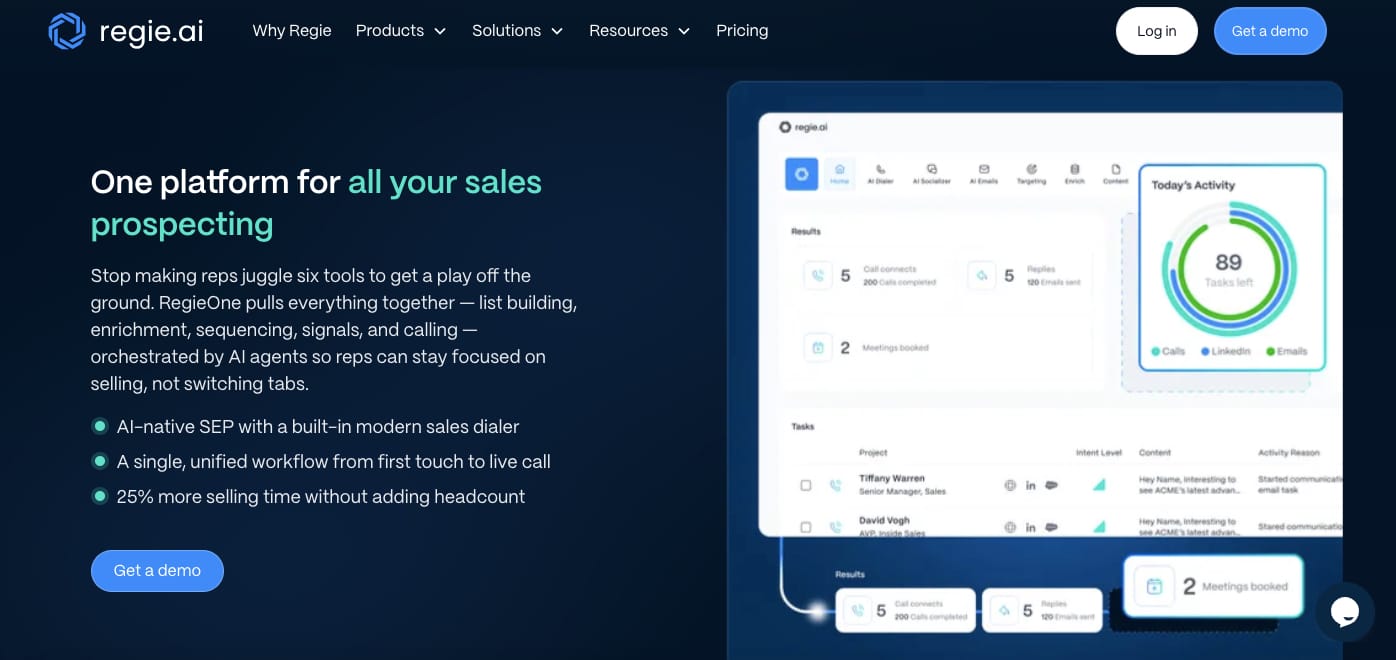
Regie.ai focuses on one of the hardest parts of outbound: writing high‑quality, personalized sequences at scale. Its AI engine generates multi‑step campaigns, adapts messaging to different personas, and keeps content consistent across the team — making it easier to run outbound that actually resonates.
Why it’s underrated
- AI writes multi-step sequences
- Personalization at scale
- Content library for sales teams
Best for: Teams needing consistent, high-quality outbound messaging.
Why Most APAC Teams Still Struggle With Lead Gen
Even with the rise of AI tools, B2B teams across APAC continue to face structural challenges that make lead generation uniquely difficult. The region’s diversity, data gaps, and operational pressures often mean that traditional outbound methods simply don’t scale. These are the core friction points holding teams back:
1. Fragmented markets and languages
APAC isn’t one market — it’s dozens. Each country has its own language, buying culture, compliance rules, and preferred communication channels. A message that works in Singapore may fall flat in Taiwan or Japan, making it hard to run consistent, scalable campaigns.
2. Limited access to accurate regional data
Many global databases lack depth in APAC, leading to outdated contacts, missing job titles, or incomplete company profiles. This forces teams to spend hours manually verifying information before outreach even begins.
3. Slow manual prospecting
Without reliable automation, teams often rely on spreadsheets, manual research, and repetitive admin tasks. This slows down pipeline generation and reduces the number of meaningful conversations sales teams can have each week.
4. SDR burnout
High-volume prospecting, low response rates, and constant pressure to hit targets create a cycle of burnout. Many SDRs spend more time on admin work than actual selling, which drains morale and increases turnover.
5. Low reply rates due to generic outreach
Buyers in APAC expect relevance and cultural nuance. Generic templates or one-size-fits-all messaging rarely resonate, leading to low engagement and wasted effort.
How to Choose the Right AI Lead Gen Tool
With so many AI tools entering the market, it’s easy to get distracted by flashy features instead of focusing on what actually moves pipeline. The right tool should reduce manual work, improve lead quality, and fit seamlessly into your existing workflow. Here’s a simple framework to help B2B teams in APAC choose wisely:
1. Start with your ICP
Every strong lead gen strategy begins with clarity. Your tool should support your region, industry, and buyer persona — especially important in APAC, where markets are diverse and data quality varies. A tool built for Western markets may not perform well if your ICP sits in Singapore, Malaysia, or Taiwan.
2. Look for automation, not just data
A large database is helpful, but without automation, your team ends up doing the same manual tasks. Choose tools that offer workflows, enrichment, sequencing, and routing, so your SDRs spend more time talking to prospects and less time cleaning spreadsheets.
Video Credit: From Automation to Agents: Why Weak Data Makes AI Guess By Everyday AI
3. Prioritize tools with AI personalization
Buyers ignore generic outreach. Tools that can personalize messages based on role, industry, intent, or recent activity will dramatically improve reply rates. AI should help you sound more relevant — not more robotic.
4. Ensure it integrates with your CRM
Your AI tool should work with your existing stack, not create another silo. Look for integrations with platforms like HubSpot, Pubrio, or Salesforce so your team has one source of truth and doesn’t waste time jumping between systems.
5. Test with a small batch
Before committing, run a 100‑lead experiment to see how the tool performs in your real workflow. This helps you validate data accuracy, outreach quality, and conversion potential without risking your entire pipeline.
What AI Can (and Can’t) Do in Lead Generation
AI Can
- Automate prospecting
- Enrich data
- Personalize outreach
- Score and prioritize leads
- Identify buying intent
AI Can’t
- Replace human judgment
- Build relationships
- Close complex deals
- Understand cultural nuance (unless trained for APAC)
The Future of Lead Generation Is Already Here
As AI continues reshaping how B2B teams find and engage prospects, the companies that win in APAC will be the ones that pair the right tools with a clear, focused strategy. A strong AI stack doesn’t replace your team — it removes the manual friction that slows them down, freeing SDRs and marketers to spend more time on real conversations instead of repetitive admin work. Whether you’re building pipeline from the ground up or scaling an existing motion, tapping into lesser‑known AI tools — especially solutions like Pubrio that are designed with APAC’s data and outreach challenges in mind — can unlock faster, more predictable growth and give your team a meaningful edge in an increasingly competitive market.