
Is LinkedIn Data Actually Worse than Local B2B Tools?
LinkedIn is the default platform for B2B prospecting — but many APAC teams quietly wonder whether its data is actually less accurate than local B2B databases. This article breaks down the real differences, the hidden limitations, and what it means for your customer acquisition strategy.


LinkedIn Is Powerful, But Is Its Data Less Accurate Than Local APAC B2B Tools? Explore The Truth Behind Data Quality and Lead Generation
LinkedIn has become the global standard for B2B prospecting. It’s where decision‑makers live, where professional identities are updated, and where sales teams across APAC spend hours every week searching, filtering, and connecting.
But as APAC markets mature, a new question keeps surfacing:
"Is LinkedIn data actually less accurate than local B2B tools?"
It’s a fair question — especially when local platforms claim to offer “verified” or “real‑time” business data. And with APAC’s fragmented markets, language differences, and fast‑changing job mobility, data accuracy becomes a real competitive advantage.
Here we will breaks down the truth behind LinkedIn data quality, the strengths of local B2B tools, and how APAC teams should think about data when building scalable acquisition systems.

The Perception Problem: Why Many Believe LinkedIn Data Is “Bad”
LinkedIn is enormous — with over one billion users worldwide — but sheer size doesn’t automatically translate into data accuracy. In APAC, where markets are fragmented and professional identities evolve quickly, many teams run into the same recurring issues when relying solely on LinkedIn for prospecting.
One of the biggest challenges is that LinkedIn profiles are self‑maintained. Users update their information only when they feel motivated to do so, not when your sales team needs accurate data. This leads to a wide range of inconsistencies:
- Profiles that haven’t been updated for years: Many professionals create a LinkedIn account early in their career and rarely revisit it. In fast‑moving APAC markets, job changes can happen every 12–18 months, meaning LinkedIn often lags behind real‑world roles.
- Job titles that don’t match local naming conventions: APAC job titles vary significantly by country and industry. A “Manager” in one market may be equivalent to a “Senior Executive” in another. LinkedIn doesn’t standardize these titles, making segmentation harder.
- Companies that no longer exist: SMEs dominate APAC economies, and many shut down, merge, or rebrand frequently. LinkedIn profiles often continue listing outdated employers long after they’ve disappeared.
- Duplicate or incomplete profiles: Some users create multiple accounts, forget passwords, or leave profiles half‑finished. This creates noise in search results and reduces targeting accuracy.
- Limited visibility into SMEs and non‑English‑speaking markets: LinkedIn adoption is strong in tech and corporate sectors, but weaker in traditional industries, local businesses, and regions where English isn’t the primary language. This leaves major gaps in coverage.
A 2023 industry review highlighted that LinkedIn’s data accuracy varies significantly by region and industry, with outdated company websites and inconsistent profile updates being common issues. For teams unfamiliar with these nuances, it’s easy to assume LinkedIn data is “bad” — when in reality, it’s simply user‑generated, not system‑verified.
Understanding this distinction is key. LinkedIn isn’t designed to be a perfect database. It’s designed to reflect professional identity and activity — which naturally introduces variability, especially in diverse APAC markets.
The Hidden Strength of LinkedIn: Intent Signals
For all its flaws in data accuracy, LinkedIn offers something that local B2B databases simply cannot replicate: real‑time intent signals. Unlike static lists or government‑verified registries, LinkedIn reflects professional activity as it happens.
These signals include:
- Engagement behavior — who is liking, commenting, or sharing industry content
- Professional activity patterns — job changes, promotions, new responsibilities
- Network relationships — clusters of influence within a company or sector
- Content interactions — topics prospects are actively following or discussing
These signals matter because they reveal who is active, who is researching, and who is open to outreach right now. For B2B teams, this is the difference between contacting a cold name in a database and engaging someone already showing signs of interest.
Video Credit: Sales Navigator Hack: Use Buyer Signals to Prioritize Outreach By LinkedIn for Sales
LinkedIn’s own APAC benchmark report highlights that the platform remains one of the most trusted environments for B2B engagement, consistently delivering high‑quality audiences and strong lead generation performance.
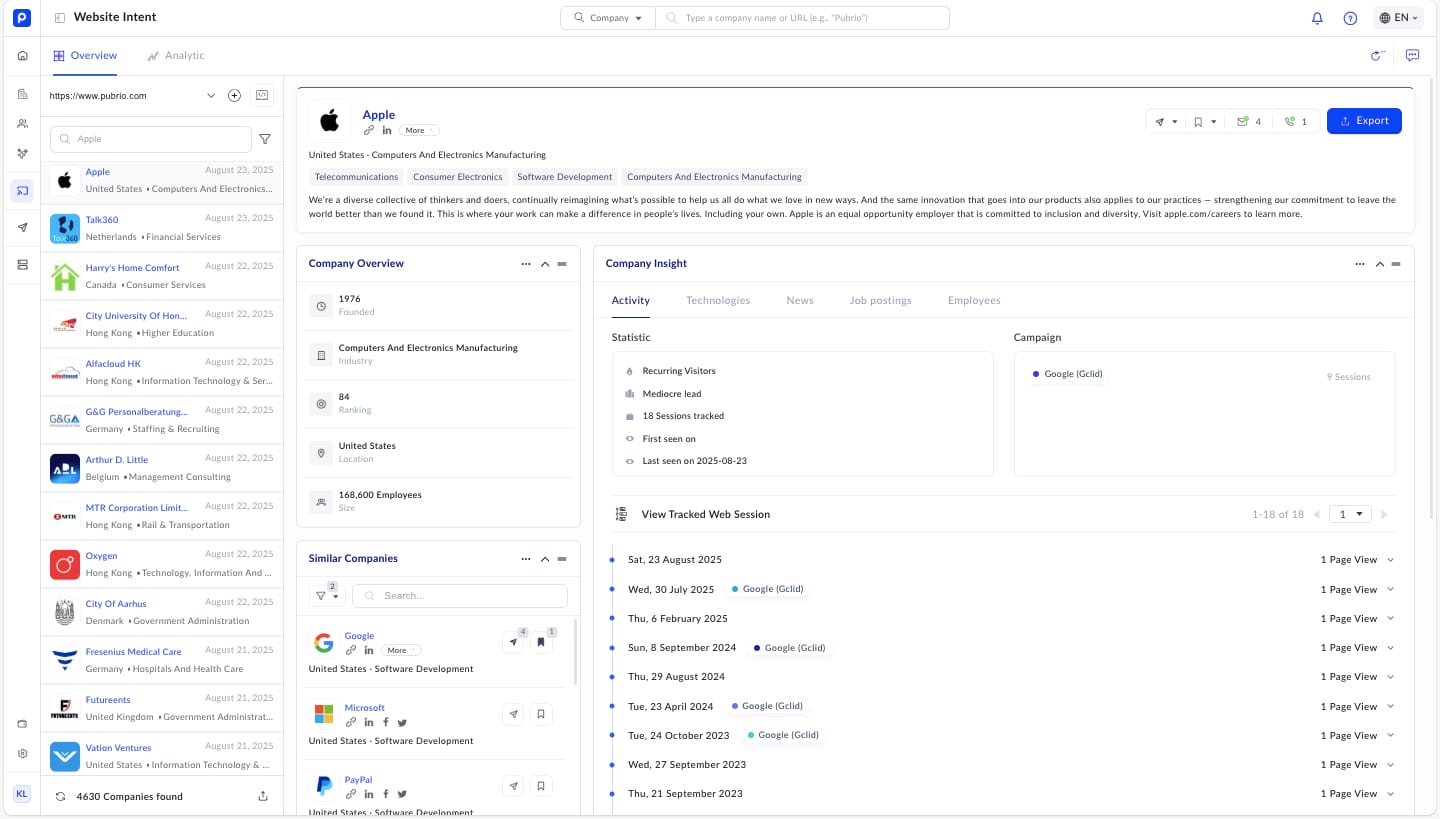
And this is where platforms like Pubrio quietly add value. Instead of treating LinkedIn as just a place to “find profiles,” Pubrio uses these intent signals to help teams prioritize the right prospects and time their outreach more effectively — without relying solely on static data. It’s not about replacing LinkedIn or local tools, but about interpreting the signals that matter and turning them into meaningful engagement.
Why the Future of APAC Prospecting Is Hybrid Data
As powerful as LinkedIn’s intent signals are, they represent only one side of the prospecting equation. APAC markets are uniquely complex — shaped by diverse languages, fragmented industries, and a high concentration of SMEs that don’t always maintain an active LinkedIn presence. This means relying on LinkedIn alone often leaves teams with an incomplete picture of their total addressable market.
This is why more teams are shifting toward hybrid data models, where LinkedIn’s real‑time activity is combined with the structured accuracy of local and regional business datasets. LinkedIn helps you understand who is active and showing interest, while local datasets help confirm who they are, where they work, and whether they truly fit your ICP.
Modern lead generation platforms — Pubrio included — are built around this principle. Instead of treating LinkedIn or local tools as standalone sources, they unify multiple data streams into a single, enriched view. This gives teams the ability to:
- validate identities and job roles
- confirm company details across regions
- prioritize prospects based on real‑time intent
- reduce noise from outdated or incomplete profiles
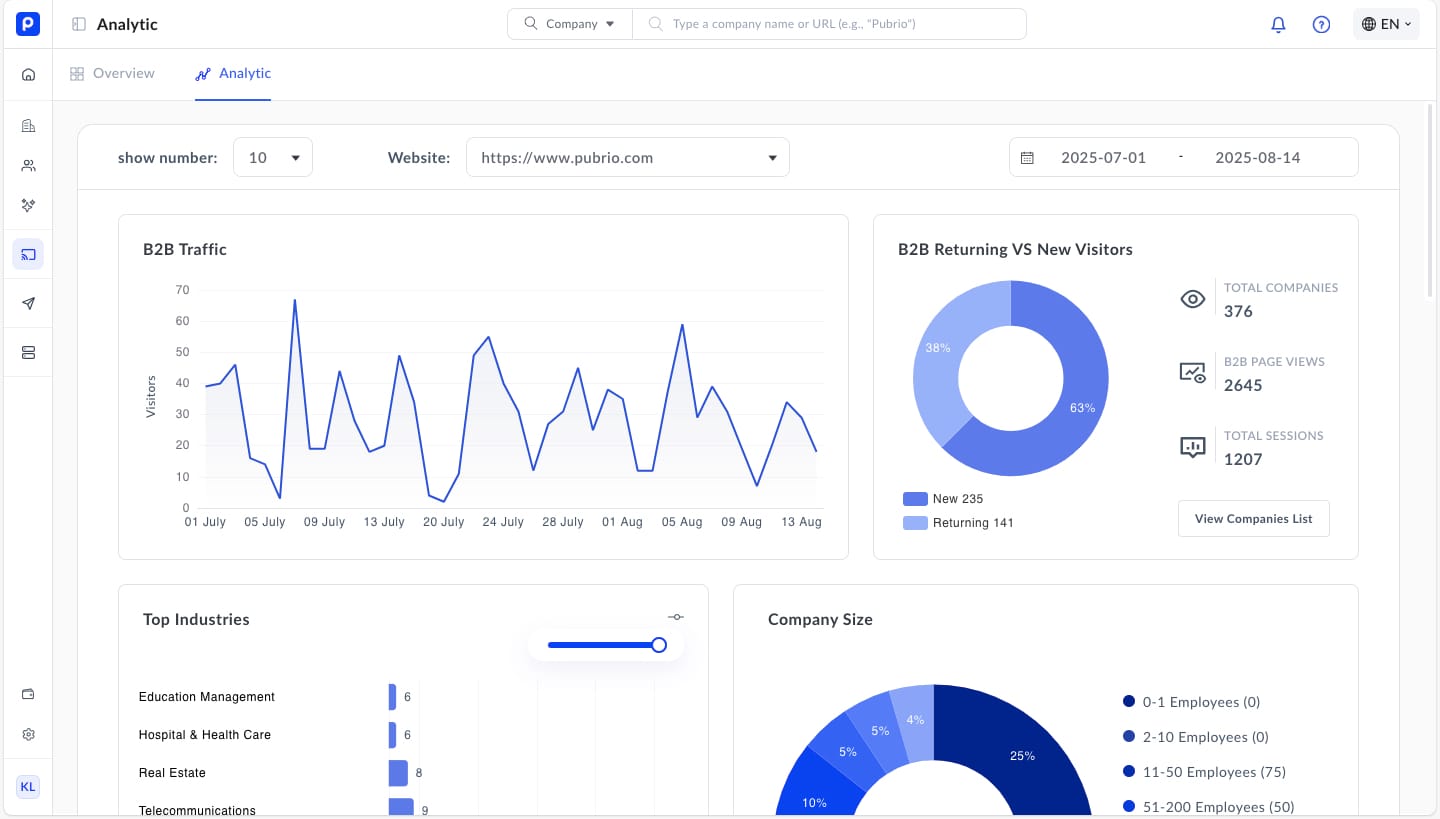
In practice, this hybrid approach helps APAC teams identify the right people faster, understand their context more clearly, and engage them at the moment they’re most receptive. It’s not about replacing LinkedIn or local tools — it’s about using each for what it does best, and letting the combination drive more predictable, scalable customer acquisition.
Common Misconceptions About LinkedIn Data
“LinkedIn data is outdated.” Partially true — but active users update frequently, and intent signals are real‑time.
“Local tools are always more accurate.” Not always — many rely on scraped or outdated government data.
“LinkedIn is enough for prospecting.” Not in APAC — SME coverage is too limited.
“Local tools can replace LinkedIn.” They can’t replicate engagement or intent signals.
Rethinking B2B Data for APAC Growth
The real question isn’t whether LinkedIn data is “better” or “worse” than local B2B tools — it’s how APAC teams can combine both to build a clearer, more dependable view of their market. LinkedIn reveals real‑time intent, while regional datasets provide the verified business context needed to confirm whether someone truly fits your ICP. On their own, each has blind spots. Together, they create a stronger foundation for meaningful outreach.
This shift toward blended data is shaping how modern lead generation platforms operate, and Pubrio is part of that evolution. By bringing intent signals and verified business information into one workflow, teams gain a more complete understanding of who to engage and when. When accuracy and timing work in tandem, outreach becomes more relevant, and pipeline quality improves across APAC’s diverse markets. The teams that excel are the ones who know how to turn multiple signals into a unified, predictable acquisition engine.